
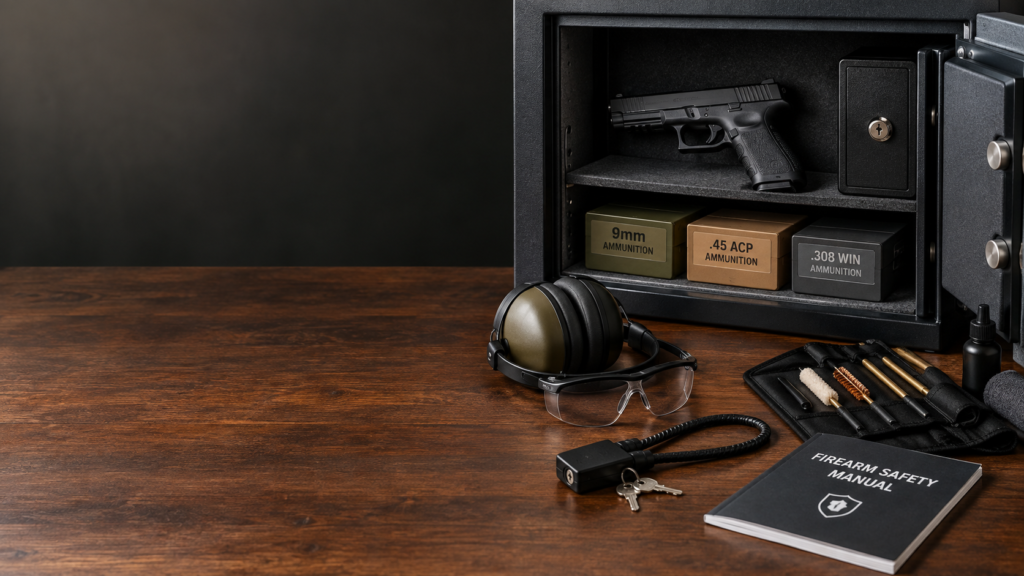
Gun & Ammo: A Practical Guide to Choosing, Using, and Storing Firearms and Ammunition Safely
Whether you are a first-time firearm owner, an experienced shooter, or someone researching guns and ammunition for the first time, understanding the relationship between a firearm and its ammunition is essential.
A gun is only as reliable and safe as the way it is selected, maintained, stored, and used. Ammunition also needs to be chosen carefully. Using the wrong cartridge, storing ammunition improperly, or ignoring basic safety rules can create serious risks.
This guide explains the fundamentals of gun and ammo ownership, including firearm safety, common ammunition types, storage practices, and the importance of following local laws.
Understanding the Difference Between a Gun and Ammunition
A firearm is the device that fires a projectile. Ammunition is the complete cartridge used by that firearm. A cartridge generally includes several parts:
- The bullet or projectile
- The casing
- The powder or propellant
- The primer
The caliber or gauge of the ammunition must match the firearm. For example, ammunition designed for one caliber should never be used in a firearm chambered for another caliber. Even ammunition that appears similar may not be compatible.
Always check the markings on the firearm and compare them with the information printed on the ammunition box. When there is any uncertainty, consult the firearm manufacturer, a qualified gunsmith, or a certified firearms instructor.
Common Types of Ammunition
Different types of ammunition are made for different firearms and purposes. Understanding the basic categories can help owners make more informed decisions.
Rimfire Ammunition
Rimfire cartridges have the primer located in the rim of the casing. They are commonly associated with smaller calibers and are often used for training, target shooting, and small-game applications where legal.
Centerfire Ammunition
Centerfire cartridges contain the primer in the center of the casing. They are widely used in handguns, rifles, and many sporting firearms. Centerfire ammunition is available in a broad range of calibers and configurations.
Full Metal Jacket Ammunition
Full metal jacket, often called FMJ, generally has a soft lead core covered by a harder metal jacket. It is commonly used for target practice because it is widely available and designed for reliable feeding in many firearms.
Hollow-Point Ammunition
Hollow-point bullets contain a cavity in the nose of the projectile. Their design allows the bullet to expand under certain conditions. Laws regarding hollow-point ammunition can vary by location, so firearm owners should check applicable regulations before purchasing or using it.
Shotgun Shells
Shotgun ammunition is commonly identified by gauge, such as 12 gauge or 20 gauge, rather than caliber. Itshells may contain different loads, including birdshot, buckshot, or slugs. Each type is intended for different shooting applications and should be selected only for a compatible shotgun.
How to Choose the Right Gun and Ammo
Choosing a firearm and ammunition should begin with the intended use. A firearm selected for recreational target shooting may have different features from one used for hunting or competition.
Consider the following factors:
Purpose
Think about how the firearm will be used. Target shooting, hunting, sport shooting, and collection each involve different considerations.
Fit and Comfort
A firearm should fit the user properly and be comfortable to handle. Grip size, weight, balance, and controls can affect how confidently a person operates it.
Ammunition Compatibility
The ammunition must match the firearm’s chambering. This is one of the most important checks a firearm owner can make.
Training
Proper instruction is essential. New owners should learn from a qualified instructor who can teach safe handling, loading, unloading, storage, and range procedures.
Local Requirements
Firearm and ammunition laws differ between states, cities, and countries. Requirements may include age restrictions, background checks, permits, storage rules, purchase limits, or transportation regulations.
Essential Firearm Safety Rules
Safe gun ownership begins with consistent habits. Every firearm should be treated as loaded until it has been personally checked and confirmed otherwise.
Follow these core safety rules:
- Treat every firearm as if it is loaded.
- Keep the muzzle pointed in a safe direction.
- Keep your finger outside the trigger guard until you are ready to fire.
- Identify the target and what is beyond it.
- Use only ammunition that is specifically approved for the firearm.
- Wear appropriate eye and hearing protection at the range.
- Never handle a firearm while impaired by alcohol, drugs, or medication that affects judgment.
- Keep firearms secured from unauthorized users.
- Stop immediately if a firearm behaves unusually or makes an unexpected sound.
- Ask a qualified professional for help when you are unsure.
These rules apply at home, at a shooting range, while transporting a firearm, and during maintenance.
Proper Gun and Ammo Storage
Safe storage protects family members, visitors, and the wider community. Firearms should be stored unloaded in a locked safe, lockbox, or other secure container. Ammunition should also be kept secure and separated from unauthorized access.
A good storage area should be:
- Dry and protected from moisture
- Away from extreme heat
- Inaccessible to children and unauthorized users
- Organized so that firearm and ammunition labels remain clear
- Protected from damage, corrosion, and contamination
If a firearm is stored for a long period, follow the manufacturer’s recommendations for cleaning and maintenance. Regularly inspect the firearm and storage equipment for signs of rust, damage, or malfunction.
Maintaining Your Firearm
Routine maintenance helps a firearm remain reliable and gives the owner an opportunity to identify problems before use. Always follow the manufacturer’s instructions and make sure the firearm is unloaded before cleaning or inspecting it.
Basic maintenance may include:
- Checking that the firearm is unloaded
- Cleaning according to the manufacturer’s instructions
- Inspecting the barrel and major components
- Looking for rust, cracks, or unusual wear
- Applying only the recommended amount of lubricant
- Storing the firearm securely after maintenance
If a firearm has been damage, modify, or expose to unusual conditions, have it inspected by a qualified gunsmith before using it.
Recognizing Damaged Ammunition
Ammunition should be inspect before use. Do not use cartridges that show signs of damage, corrosion, dents, cracks, loose projectiles, or contamination.
Keep ammunition in its original packaging whenever possible. This helps preserve important information about the caliber, lot number, manufacturer, and safe handling instructions.
If ammunition appears damaged or questionable, do not attempt to fire it. Follow local disposal guidance or contact a qualified firearms professional for advice.
Responsible Gun Ownership
Responsible ownership involves more than purchasing a firearm. It includes education, secure storage, regular practice, legal compliance, and respect for other people.
Owners should keep up with changes to local firearm laws and understand the rules that apply to possession, transportation, storage, and use. Laws can change, and requirements may differ significantly from one location to another.
For anyone new to firearms, a certified safety course is an excellent starting point. Structured training can help build safe habits and improve confidence without encouraging careless handling.
Finding Reliable Gun and Ammo Information
The quality of information matters when researching firearms and ammunition. Look for guidance from firearm manufacturers, certified instructors, established shooting organizations, licensed dealers, and qualified gunsmiths.
When comparing products, pay attention to:
- Manufacturer specifications
- Compatibility information
- Safety instructions
- Warranty details
- Storage recommendations
- Customer service and return policies
- Applicable laws and regulations
At Silks Roads Market, readers can explore more information and resources related to products, equipment, and responsible purchasing. Always review product details carefully and confirm that any firearm or ammunition purchase complies with the laws in your area.
Final Thoughts on Gun and Ammo Safety
Understanding gun and ammo basics is an important part of responsible firearm ownership. The right ammunition must match the firearm, safety procedures must be follow every time, and firearms should always be store securely.
Education should come before use. If you are unsure about compatibility, maintenance, storage, transportation, or local requirements, seek advice from a qualified professional.
Responsible ownership protects you, your household, and the people around you. With proper training, careful storage, and attention to manufacturer guidance, firearm owners can develop safe and informed habits for years to come.