
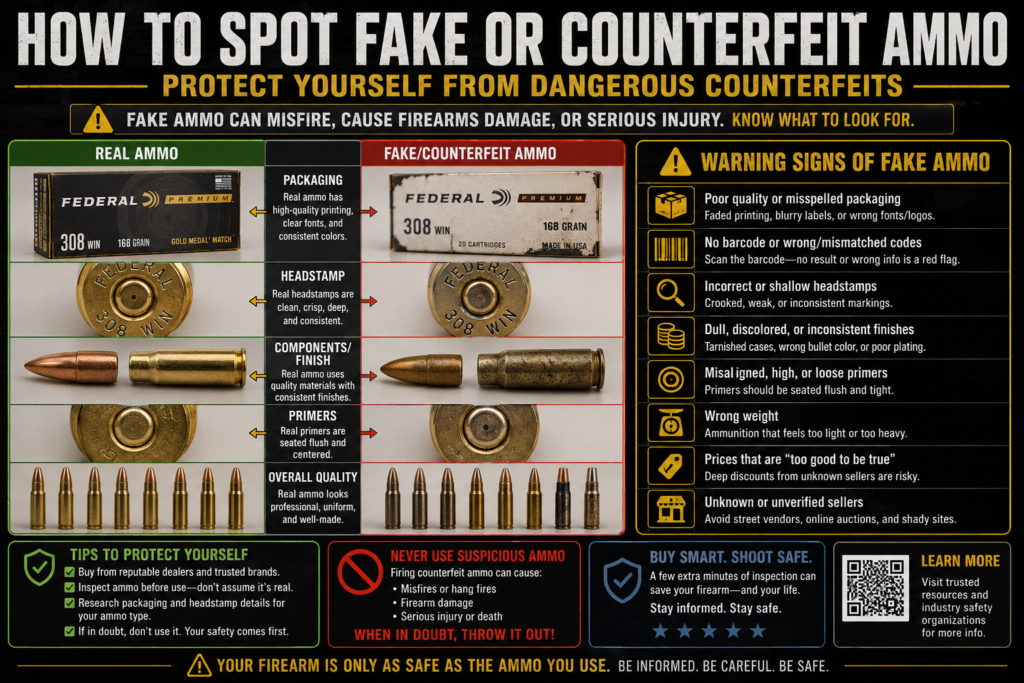
How to Spot Fake or Counterfeit Ammo – Protect Yourself from Dangerous Counterfeits
Counterfeit ammunition is becoming more common.
Buy any type of ammo from our store “silksroadsmarket.com”
What used to be a rare problem has now spread across online marketplaces, gun shows, and even some small brick-and-mortar shops. Fake ammo is not just a waste of money. It is genuinely dangerous. A single counterfeit round can destroy your firearm, cause serious injury, or even kill you.
The good news is that most fake ammunition is easy to spot once you know what to look for.
This guide will teach you how to spot fake or counterfeit ammo before you load it into your firearm. You will learn the visual signs, packaging red flags, and handling tests that separate safe ammunition from dangerous counterfeits.
Let us get started.
Table of Contents
-
Why Counterfeit Ammo Is More Dangerous Than You Think
-
The Most Commonly Faked Calibers
-
Packaging Red Flags – What to Look For First
-
Visual Inspection of the Cartridge
-
Headstamp Examination – Your First Clue
-
Primer and Bullet Sealant Checks
-
Weight and Measurement Tests
-
The Rattle Test – Listening for Problems
-
Reloaded Ammo vs Factory New – Knowing the Difference
-
Where Counterfeit Ammo Most Often Appears
-
What to Do If You Suspect Fake Ammo
-
Frequently Asked Questions
-
Final Thoughts
Why Counterfeit Ammo Is More Dangerous Than You Think
Many buyers assume fake ammunition simply will not fire. That assumption is wrong and dangerous.
Counterfeit ammo can fail in several ways, each more hazardous than the last.
Squib Loads
A squib occurs when the bullet does not have enough power to exit the barrel. The projectile becomes stuck inside the barrel. If you fire another round behind a squib, your gun will explode in your hands. This causes catastrophic damage to the firearm and severe injury to the shooter.
Overpressure Rounds
Some counterfeiters use the wrong powder or too much powder. These overpressure rounds generate excessive chamber pressure. The result can be a blown case head, ruptured chamber, or fragmented slide.
Wrong Powder Type
Counterfeiters often use whatever powder they can find. Pistol powder in a rifle round creates a bomb. Rifle powder in a pistol round may not generate enough pressure to cycle the action, but it can still cause erratic and dangerous behavior.
Improper Seating Depth
Bullets seated too deep increase pressure dramatically. Bullets seated too shallow may contact the rifling before firing, also spiking pressure. Both conditions can destroy your firearm.
Bottom line: Buying counterfeit ammo is not like buying a fake watch or counterfeit shoes. Fake ammo can kill you.
The Most Commonly Faked Calibers
Counterfeiters target the most popular calibers because demand is highest.
Most Frequently Counterfeited Calibers
-
9mm Luger – The world’s most popular handgun caliber
-
.223 Remington / 5.56 NATO – Standard AR-15 ammunition
-
.22 LR – High volume sales make it attractive to counterfeiters
-
.308 Winchester / 7.62 NATO – Popular for hunting and precision shooting
-
.45 ACP – Still widely used in defensive and competition shooting
Buy any type of ammo from our store “silksroadsmarket.com”
Rarely Counterfeited Calibers
-
Obsolete calibers like .32-20 Winchester
-
Extremely large calibers like .50 BMG
-
Niche competition calibers like 6.5-284 Norma
If you are buying popular, high-volume ammunition from non-traditional sources, your risk is highest. Stick to reputable dealers whenever possible.
Packaging Red Flags – What to Look For First
Before you even open the box, examine the packaging carefully. Counterfeiters almost always make mistakes here.
Poor Print Quality
Legitimate ammunition manufacturers use high-quality printing. Look for:
-
Blurry text or logos
-
Misaligned colors or registration
-
Faded ink that rubs off easily
-
Typos or grammatical errors
Missing or Altered Branding
-
No manufacturer name or address
-
Generic “Ammo” or “9mm” labels with no brand
-
Brand names that are misspelled (e.g., “Winchestr” instead of “Winchester”)
-
Logos that look slightly wrong (wrong font, wrong proportions)
Incorrect Label Information
-
Wrong caliber listed
-
Mismatched bullet weight on label vs box contents
-
Missing lot numbers or manufacturing dates
-
No barcode or a barcode that does not scan
Seals and Tapes
Factory ammunition boxes are sealed with consistent, professional tape. Look for:
-
Hand-cut tape instead of machine-applied tape
-
Multiple layers of tape
-
Residue from previous tape (indicates repackaging)
-
No security seal on brands that typically use one
Image Suggestion: Side-by-side comparison of real vs counterfeit ammunition packaging. ALT text: “How to spot fake or counterfeit ammo by examining packaging quality”
Visual Inspection of the Cartridge
Once you open the box, inspect every cartridge individually. Do not assume that because one round looks good, all of them are safe.
Case Condition
-
Real ammo: Consistent color, smooth surface, clean
-
Fake ammo: Discoloration, tarnishing, pitting, or corrosion
Bullet Condition
-
Real ammo: Smooth bullet surface, consistent shape, clean
-
Fake ammo: Dents, scratches, uneven surfaces, visible seams
Case Mouth and Crimp
-
Real ammo: Even crimp, no visible gaps between bullet and case
-
Fake ammo: Uneven crimp, gaps, visible bullet lube or sealant outside the case
Overall Consistency
Line up five to ten rounds on a flat surface. Roll them gently. Legitimate ammunition shows perfect consistency in length and shape. Counterfeit ammunition often reveals variations in overall length.
Headstamp Examination – Your First Clue
The headstamp is the marking on the bottom of the cartridge case around the primer. This is one of the most reliable ways to identify counterfeit ammo.
What a Proper Headstamp Looks Like
-
Clear, sharp lettering
-
Correct manufacturer code (e.g., “FC” for Federal, “WIN” for Winchester, “R-P” for Remington)
-
Caliber marking (e.g., “9mm,” “223 REM,” “308 WIN”)
-
Consistent depth and alignment across all rounds
Headstamp Red Flags
-
No headstamp at all (common on low-quality counterfeits)
-
Headstamp that does not match the caliber on the box
-
Blurry or incomplete lettering
-
Multiple different headstamps in the same box (indicates repackaged mixed ammunition)
-
Unfamiliar headstamp codes from unknown manufacturers
Buy any type of ammo from our store “silksroadsmarket.com”
Manufacturer Code Reference
| Code | Manufacturer |
|---|---|
| FC | Federal Cartridge |
| WIN | Winchester |
| R-P | Remington |
| SPEER | Speer |
| CCI | CCI / Speer |
| HORNADY | Hornady |
| PPU | Prvi Partizan |
| S&B | Sellier & Bellot |
| GFL | Fiocchi |
If you see a code you do not recognize, research it before firing. Some legitimate foreign manufacturers use less common codes, but counterfeits often use fake or nonsensical markings.
Primer and Bullet Sealant Checks
High-quality ammunition manufacturers use sealants to protect primers and case mouths from moisture and contamination. Counterfeit ammunition rarely includes proper sealant.
Primer Sealant
-
Real ammo: Visible ring of colored sealant around the primer (red, green, or purple depending on manufacturer)
-
Fake ammo: No sealant, uneven sealant, or incorrect color
Bullet Sealant (Case Mouth)
-
Real ammo: Thin, consistent ring of sealant where bullet meets case
-
Fake ammo: No sealant, globs of excess sealant, or sealant that flakes off
Note: Not all legitimate ammunition uses visible sealant. Some brands skip it entirely. However, if the brand on the box typically uses sealant (like Federal or Speer) and your rounds have none, that is a red flag.
Weight and Measurement Tests
Counterfeit ammunition often fails basic dimensional and weight checks. You do not need expensive tools to perform these tests.
The Caliber Check
Using a caliper (digital or analog), measure:
-
Overall length – Compare to published specifications for that caliber
-
Case length – Should be consistent across all rounds
-
Bullet diameter – Should match the caliber (e.g., .355 inches for 9mm)
A variance of more than a few thousandths of an inch across rounds indicates poor quality control, which is common in counterfeit ammunition.
The Weight Check
Using a digital scale, weigh individual rounds from the same box.
-
Legitimate ammunition varies by less than 2 to 3 grains per round
-
Counterfeit ammunition often shows weight variations of 5 to 10 grains or more
Inconsistent weight means inconsistent powder charges. Inconsistent powder charges mean unpredictable pressure. Unpredictable pressure is dangerous.
The Rattle Test – Listening for Problems
This is the simplest test you can perform.
Hold a cartridge near your ear and shake it gently.
-
Proper ammo: You should hear nothing. The powder inside is packed tightly against the primer.
-
Suspicious ammo: You hear a distinct rattling sound. Powder moves freely inside the case.
Excessive rattling indicates that the case is not fully filled with powder. This can lead to squib loads or erratic velocity.
Important caveat: Some low-power target loads and certain subsonic rounds use smaller powder charges that may rattle slightly. However, for standard defensive or full-power ammunition, no rattle is the correct result.
Reloaded Ammo vs Factory New – Knowing the Difference
Many buyers confuse counterfeit ammunition with legitimate reloaded ammunition. They are not the same thing.
Legitimate Reloaded Ammo
-
Clearly labeled as “remanufactured,” “reloaded,” or “reman”
-
Sold by licensed ammunition manufacturers
-
Uses previously fired cases that are resized and inspected
-
Still subject to quality control standards
Counterfeit Ammo
-
Labeled as new but is actually reloaded or repackaged
-
Sold by unlicensed individuals or fake companies
-
Uses mixed brass from unknown sources
-
No quality control or safety testing
Buy any type of ammo from our store “silksroadsmarket.com”
How to Tell the Difference
-
Primer appearance: Reloaded ammo often shows flattened or cratered primers from previous firing
-
Case condition: Reloaded cases may show extractor marks, dings, or slight case mouth deformation
-
Headstamp variety: Reloaded ammunition frequently has multiple different headstamps in the same box
If you choose to buy reloaded ammunition, buy only from reputable, licensed manufacturers like LAX Ammunition, Freedom Munitions, or SuperVel. Never buy what appears to be reloaded ammo from private sellers or unknown websites.
Where Counterfeit Ammo Most Often Appears
Knowing where fake ammo is most common helps you avoid it entirely.
High-Risk Sources
-
Online marketplaces like eBay or Facebook Marketplace (ammo sales are against their policies, but sellers still list it)
-
Unverified third-party sellers on auction sites
-
Gun show private sellers with no business license
-
Pawn shops that buy from unknown individuals
-
Social media firearm groups where members sell to each other
Low-Risk Sources
-
Licensed ammunition manufacturers selling directly
-
Major online retailers like Brownells, MidwayUSA, Target Sports USA
-
Local gun stores with established reputations
-
Big box sporting goods stores like Cabela’s, Bass Pro Shops, Sportsman’s Warehouse
No-Risk Sources
Buying directly from manufacturers like Federal, Winchester, CCI, Speer, Hornady, or Remington eliminates virtually all counterfeit risk.
Image Suggestion: A comparison chart showing safe vs risky places to buy ammunition. ALT text: “Where counterfeit ammo is most commonly found – how to spot fake or counterfeit ammo”
What to Do If You Suspect Fake Ammo
If you believe you have purchased counterfeit ammunition, follow these steps.
1 – Do Not Fire It
This is the most important rule.Set it aside immediately.
2 – Isolate the Ammunition
Place the suspected counterfeit ammo in a sealed container away from other ammunition. Label it clearly as “Suspected Counterfeit – Do Not Use.”
3 – Contact the Manufacturer
Reach out to the brand whose packaging was used. For example, if the box says Winchester, contact Winchester. They will want to know about counterfeit products bearing their name. They may ask you to ship samples for analysis.
4 – Contact the Seller
If you bought from a legitimate retailer, notify them immediately. Reputable retailers will refund your money and investigate their supply chain.
5 – Report to Law Enforcement
Counterfeit ammunition is a crime. Report it to your local police department or the ATF. Provide as much information as possible about where and from whom you purchased it.
Frequently Asked Questions
How common is counterfeit ammunition?
Counterfeit ammunition has become significantly more common since 2020. Online marketplaces and social media groups have made it easier for counterfeiters to reach buyers directly.
Can counterfeit ammo damage my gun?
Yes. Counterfeit ammunition is one of the leading causes of catastrophic firearm failures. Squib loads, overpressure rounds, and wrong powder types can all destroy a firearm.
Is all reloaded ammunition counterfeit?
No. Legitimate reloaded ammunition from licensed manufacturers is safe. The problem is reloaded ammunition that is misrepresented as new or sold by unlicensed individuals.
How can I verify if my ammo is real?
Contact the manufacturer directly. Provide them with photos of the packaging, headstamp, and lot numbers. Most major manufacturers have customer service teams that handle exactly these inquiries.
Are expensive brands safer from counterfeiting?
Not necessarily. Counterfeiters often target premium brands like Hornady and Federal because they can charge higher prices. Always inspect premium ammunition just as carefully as budget ammunition.
Can I use counterfeit ammo for practice if it looks okay?
Absolutely not. There is no safe way to use counterfeit ammunition. Even if five rounds fire correctly, the sixth could destroy your firearm or injure you.
Buy any type of ammo from our store “silksroadsmarket.com”
Final Thoughts
Knowing how to spot fake or counterfeit ammo is a survival skill for any responsible gun owner. Counterfeit ammunition is not a victimless crime. It is a direct threat to your safety and the safety of everyone around you.
Quick Safety Checklist Before Buying Ammo
| Check | What to Look For |
|---|---|
| Packaging | Clean print, correct branding, no typos |
| Headstamp | Clear marking, matches caliber, consistent |
| Primer sealant | Present and correct color |
| Bullet condition | Smooth, consistent, no damage |
| Weight | Consistent across multiple rounds |
| Rattle test | No audible powder movement |
| Source | Reputable dealer, not private seller |
Trust your instincts. If something feels wrong about a box of ammunition, do not fire it. The cost of replacing suspect ammo is nothing compared to the cost of a destroyed firearm or a trip to the emergency room.
Buy from reputable sources. Inspect every round. Stay safe.